A place where the rules feel slightly off


There is a place on Earth where, technically, you are not allowed to be buried after you die. Not because of religion, not because of some strange philosophical stance, and not because anyone there is trying to outsmart mortality. It comes down to something far less dramatic and somehow much stranger. The ground itself refuses to cooperate.
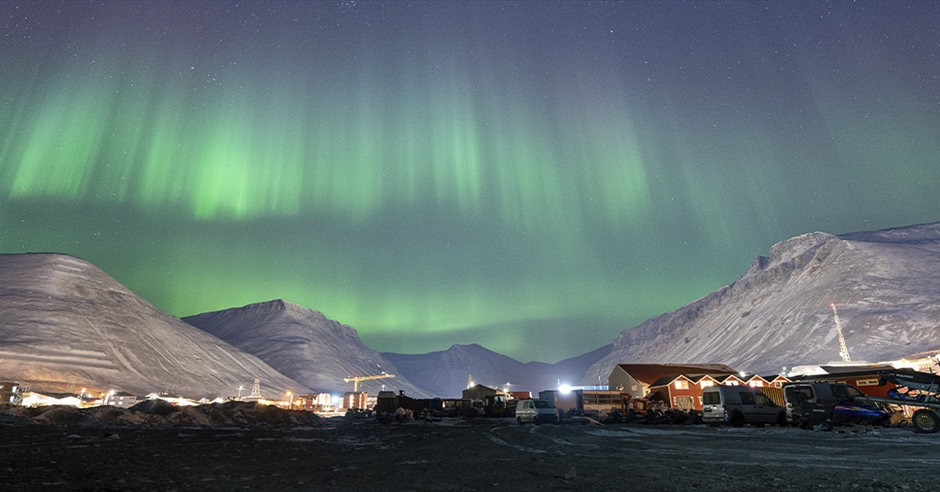
The town is Longyearbyen, a small settlement tucked into the Norwegian archipelago of Svalbard. It sits deep in the Arctic, far beyond what most people would consider livable. Winters stretch on in near darkness, the sun disappears for months at a time, and polar bears are a very real part of daily life. It is beautiful in a stark, quiet way, with rows of colorful houses set against endless snow and mountains that look like they have been frozen mid-breath.
Longyearbyen feels remote in a way that is hard to describe until you see it. There are no roads connecting it to other cities. Travel in and out happens by plane or boat, and even those options can be limited depending on the weather. It is the kind of place where the environment dictates the rules, not the other way around. That reality shapes nearly every aspect of life there, including what happens after it ends.
The ground that doesn’t behave like ground


The issue begins with the ground beneath the town. Longyearbyen sits on permafrost, a layer of soil that remains permanently frozen year round. On the surface, it looks like any other earth, just colder and harder to dig into. Underneath, it behaves completely differently. In most parts of the world, soil is alive with bacteria and microorganisms that break down organic material over time. It is part of a natural cycle that people rarely think about, but it quietly handles what happens after burial.
In permafrost, that process slows to a near stop. The cold preserves instead of decomposes. Anything buried there does not break down the way it should. Instead, it remains in a kind of suspended state, held in place by the frozen ground. This is not just a theoretical idea. It has been observed in a way that made people pause and rethink what they were doing.
When history didn’t stay buried


In the early 20th century, several people who died during the 1918 influenza pandemic were buried in Longyearbyen. Decades later, researchers examined some of those graves and found that the bodies had not decomposed in the usual way. Even more unsettling was the discovery that traces of the virus were still present. In normal conditions, time and biology would have taken care of that. In permafrost, time had simply held everything in place.
That finding raised a quiet but serious concern. If pathogens could remain preserved in frozen ground, there was no clear way to guarantee they would stay harmless forever. It was not about panic or dramatic scenarios. It was about risk, however small, and the reality that this environment does not behave like anywhere else.
So the town adjusted.
What actually happens instead


Burials were effectively stopped. The cemetery that still exists in Longyearbyen is no longer used for new graves. It remains as a reminder of what came before, but it is not part of the present. Instead, when someone becomes seriously ill, they are typically transported to mainland Norway. If a person passes away in Longyearbyen, their body is flown out of the settlement. The final steps happen somewhere else, in a place where the ground can do what it is meant to do.
It is not framed as a ban in the way people often imagine. There is no sign posted at the edge of town declaring that death is not allowed. Life simply continues with the understanding that certain things cannot happen there. It is handled quietly, practically, and without much attention.
A town shaped by its environment


This is not the only way Longyearbyen operates differently. Daily life comes with a set of expectations that would feel unusual almost anywhere else. Leaving town without protection is not advised because polar bears roam the area. At one point, cats were not allowed because they threatened local bird populations. Employment matters more than usual, because losing a job can mean losing the ability to stay on the island. It is a place where systems are shaped directly by the environment, not by convenience.
All of it ties back to the same idea. Longyearbyen exists on terms that are not entirely human. The landscape sets limits, and the people who live there work within them. Most of the time, those limits are practical and easy to understand. The situation with burials is different. It touches something more personal, something people expect to follow certain patterns no matter where they are.
It leaves a different kind of impression

Most of us grow up with the assumption that the earth eventually takes over. It is part of how we understand the natural order of things. In Longyearbyen, that process does not happen the same way. The ground preserves instead of dissolves, holds instead of releases. It turns something familiar into something that feels slightly out of place.
There is no dramatic story behind it. No attempt to control something bigger than the town itself. It is simply a response to a reality that does not change. The permafrost remains, the conditions stay the same, and the solution continues because it works.
Longyearbyen does not try to make this fact more meaningful than it is. It does not present itself as mysterious or unusual. It is just a town that adapted to its surroundings in a way that most places never have to consider.
Still, it leaves an impression.
There is something quietly unsettling about a place where even the ground does not behave as expected. Not in a way that feels dangerous, but in a way that lingers. It shifts the way you think about how the world works, just slightly, and that is enough.
References
- Norwegian Institute of Public Health research on preserved influenza samples in Arctic burials
- Smithsonian Magazine reporting on Longyearbyen burial practices
- National Geographic coverage on Arctic permafrost and preservation
- Visit Svalbard tourism and historical archives

Leave a Reply