And you don’t even notice it
The Fact
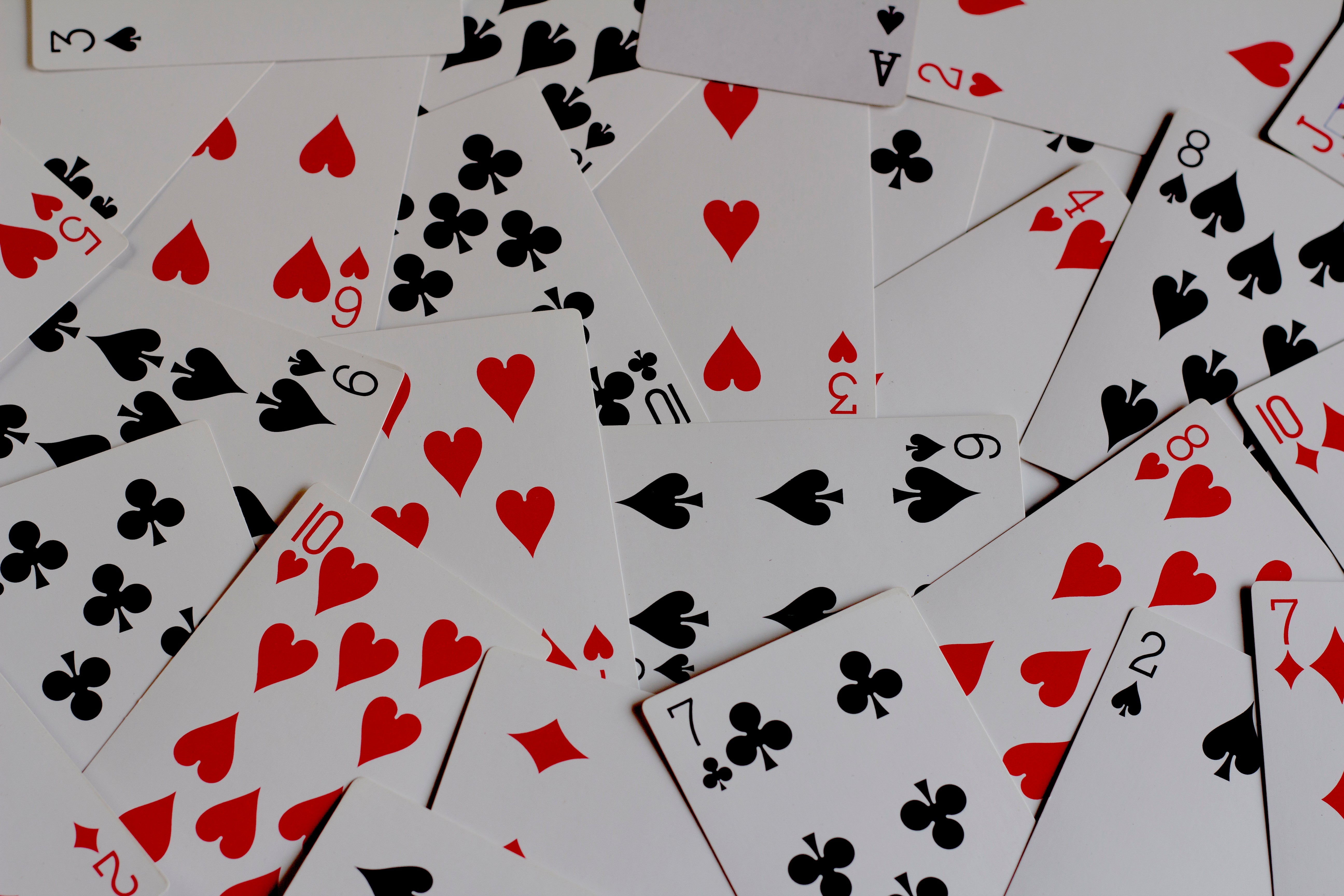
There are more possible ways to arrange a deck of 52 playing cards than there are atoms on Earth.
The Number


A standard deck of cards has 52 cards.
That feels small. Countable. Predictable.
Until you ask a simple question:
How many different ways can those 52 cards be arranged?
The answer is:
52 factorial.
Written out, it looks like this:
80,658,175,170,943,878,571,660,636,856,403,766,975,289,505,440,883,277,824,000,000,000,000
It’s the kind of number your brain stops trying to process halfway through.
Mathematicians write it as 52! because saying it out loud would take longer than most conversations.
To compare:
- the number of atoms on Earth is estimated around 10⁵⁰
- 52! is about 10⁶⁸
That’s not “a lot more.”
That’s a completely different scale of reality.
The First Time People Realize This


Most people hear this fact the same way:
Someone casually says it during a game.
You’re sitting there, maybe mid shuffle, not really paying attention.
Then it hits.
You look down at the cards in your hand like they just changed.
Because they did.
That exact order has almost certainly never existed before. Not in a casino. Not in history. Not anywhere.
And the weird part is how normal it feels.
You’re just shuffling cards. Talking. Playing.
Meanwhile, mathematically, you’ve created something entirely new.
A mathematician once explained it like this:
“Every time you shuffle a deck, you are sampling from a space so vast it exceeds physical reality.”
And yet it feels like nothing.
What That Actually Means


Let’s slow it down.
Imagine this:
You start shuffling a deck of cards once per second.
You never stop.
Now imagine every human who has ever lived joins you.
All of you shuffling, nonstop, since the beginning of humanity.
You still would not come close to seeing every possible arrangement.
Not even close.
You wouldn’t reach even a tiny fraction of one percent.
Another way to think about it:
If every atom on Earth had its own deck of cards
and each one shuffled every second
You still wouldn’t cover all possibilities before the heat death of the universe.
That’s how large this number is.
Why It Gets So Big


The reason this explodes so quickly is because of how permutations work.
The first card has 52 possible positions.
The second has 51.
The third has 50.
And it keeps going.
52 × 51 × 50 × 49… all the way down to 1.
Each step multiplies the complexity.
By the time you reach even 20 cards, the number is already enormous.
By 52, it becomes something that no human can intuitively grasp.
It’s one of the simplest examples of exponential growth breaking our sense of scale.
Or put more simply:
Your brain is not built to understand numbers like this.
Things That Make This Even Stranger
- A properly shuffled deck is almost guaranteed to be unique in the history of existence
- Even removing just a few cards still leaves an absurd number of combinations
- Casinos rely on this randomness, but most players never think about it
- “Random enough” for humans is nowhere near true randomness mathematically
Also, most people don’t shuffle well.
Which means when a deck is properly randomized, it’s even more rare than people realize.
A Thought Experiment You Can’t Unthink


Take a deck of cards and shuffle it.
Look at the order.
Now imagine writing it down.
Every card. Every position.
That exact sequence likely has:
- never existed before
- will never exist again
You are holding a one time event.
Not because it’s special.
But because the number of possibilities is so large that repetition becomes almost impossible.
A mathematician once joked:
“You’re more likely to win the lottery multiple times than to ever see the same shuffled deck twice.”
And yet we treat it like nothing.
Shuffle. Deal. Move on.
What This Really Says
We tend to think of everyday things as simple.
A deck of cards feels small. Controlled. Familiar.
But hidden inside it is something massive.
Something that quietly operates on a scale larger than the physical world around us.
And you don’t need a lab or telescope to see it.
You just need a deck of cards.
Because every time you shuffle
you’re not repeating something
you’re creating something entirely new.
Shoutout
Story inspiration from Reddit user u/throwaway63638291936
References
- Persi Diaconis. The Mathematics of Card Shuffling
- Scientific American. “Shuffling Cards and Randomness”
- Wolfram MathWorld. Factorial and permutations
- Numberphile. 52 factorial explained
- Reddit thread: “What is the weirdest fact you know?” (u/throwaway63638291936)
Leave a Reply