Not survives. Not tolerates. Actually uses it.
The Fact
A type of fungus discovered at Chernobyl can use radiation as an energy source.
Where This Was Found
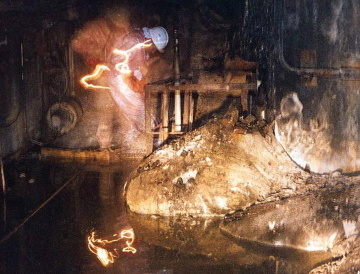


After the 1986 Chernobyl nuclear disaster, the expectation was simple:
Nothing should be living there.
The radiation levels in certain areas were so extreme that exposure for just minutes could be lethal. Entire cities were abandoned. Equipment was left to decay. The environment was considered one of the most hostile places on Earth.
But when scientists returned to study the site, they found something growing.
Dark, almost black fungi were thriving on the walls of the reactor and surrounding structures. Not barely surviving. Growing toward the radiation.
What It Actually Does


These fungi are now known as radiotrophic fungi.
Instead of using sunlight like plants, they use radiation.
The process is similar to photosynthesis, but with a twist:
- plants use chlorophyll to convert sunlight into energy
- these fungi use melanin to convert radiation into energy
Melanin is the same pigment found in human skin. In these fungi, it exists in much higher concentrations and appears to interact with ionizing radiation in a way that boosts growth.
In simple terms, radiation becomes fuel.
One researcher described it like this:
“It’s as if the fungi are feeding on the radiation.”
It Gets Stranger


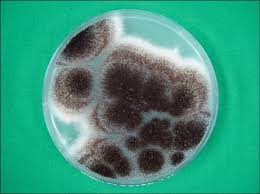
This isn’t just a one location anomaly.
Similar fungi have been found:
- inside damaged nuclear reactors
- in highly radioactive waste environments
- even on the exterior of spacecraft
Yes, space.
Experiments on the International Space Station have studied whether this fungus could actually help shield astronauts from cosmic radiation. Early results suggested it may reduce radiation exposure by absorbing it.
Which means in the future, protection from radiation might not be metal or technology.
It might be alive.
Things That Make This Even Stranger
- The fungus appears to grow toward radiation, not away from it
- It thrives in environments that would destroy most life in minutes
- It uses melanin in a way humans don’t fully understand yet
- It has been studied as a potential living radiation shield
And unlike most organisms that break down under radiation
this one seems to benefit from it.
What This Really Says
Radiation is supposed to be destructive. It breaks cells, damages DNA, and makes environments uninhabitable.
But this flips that idea completely.
Instead of avoiding danger, this organism adapted to use it.
It didn’t just survive one of the worst nuclear disasters in history
it found a way to grow because of it.
And that raises a bigger question:
How many other forms of life exist that don’t follow the rules we think are universal?
Shoutout
Story inspiration from Reddit user u/SultanOfSwave
References
- Dadachova, E., Casadevall, A. Ionizing Radiation: how fungi cope, adapt, and exploit
- NIH and PubMed studies on radiotrophic fungi and melanin
- NASA research on fungi aboard the International Space Station
- Smithsonian Magazine. Fungi That Thrive on Radiation
- Reddit thread: “What is the weirdest fact you know?” (u/SultanOfSwave)
Leave a Reply